What Is a Target Audience for Social Media?

Credit: wiredimpact.com
Your target audience for social media is the specific group of people you want to reach on your social platforms.
These are the folks most likely to:
- Care about what you offer
- Engage with your content
- Click through to your website
- Buy from you
They’re not just random followers. They’re the right followers.
So, your audience on social media is defined by shared traits, things like age, location, interests, and how they behave online. Understanding your audience demographics is the first step toward building a meaningful connection with your customers.
Here’s a practical example: A fitness brand in Dubai might know how to reach the target audience on social media by targeting women aged 25–40 who follow wellness accounts, shop online, and are active on Instagram. That’s not a broad guess. This is called a focused, intentional approach to reaching the right people.
Target Audience vs. Target Market: What’s the Difference?
Many brands confuse these two terms. Let’s clarify once and for all.
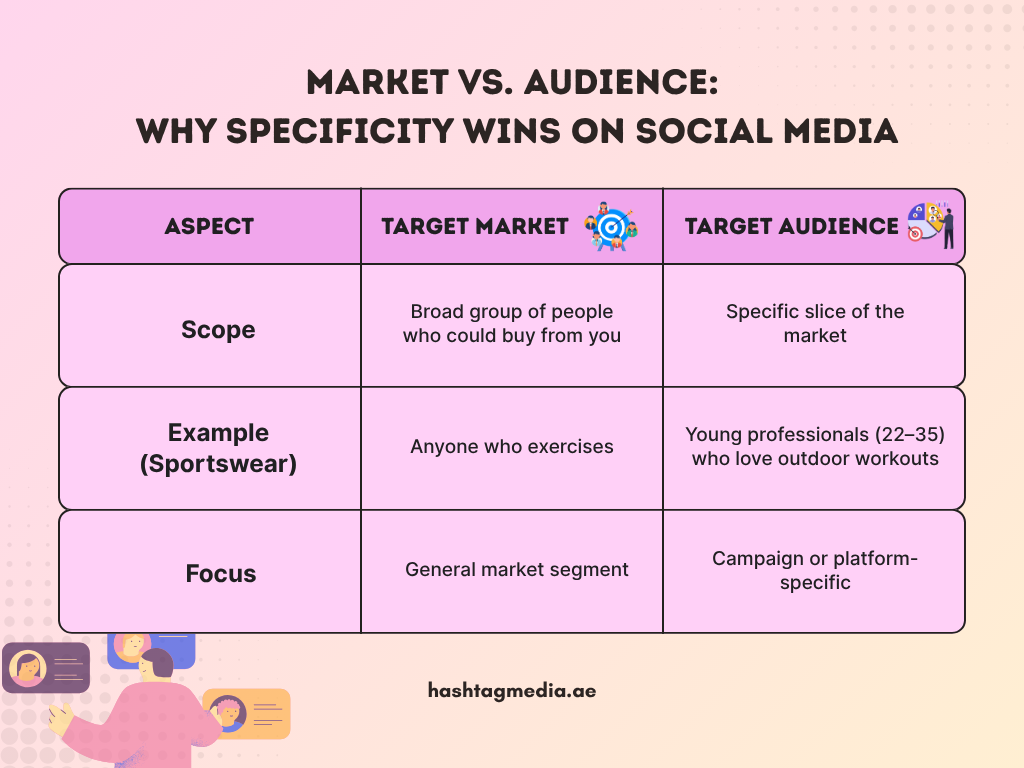
Why it matters for social media: Platforms reward relevance. The more specific your target audience is on social, the more your content resonates and the better the algorithm treats you.
This is where audience segmentation becomes critical. By dividing your broader market into smaller segments, you can craft messaging that speaks directly to each group’s pain points and desires.
Why Your Target Audience for Social Media Matters
Defining your target audience for social media isn’t just a marketing buzzword exercise. It has a direct, measurable impact on your marketing efforts and overall business goals.
Reason 1: You Stop Wasting Money
Social media ads cost money. Every penny spent reaching the wrong person is wasted.
When you know how to attract a target audience on social media, you run tighter campaigns. You get more clicks for less spend. Your ROI goes up because your message lands with people who actually care.
Understanding how social media ads target the right audience helps you allocate your budget more efficiently. Precise audience demographics mean better ad performance and stronger returns on your marketing efforts.
Reason 2: Your Content Becomes More Relevant
People scroll fast. They stop for content that feels like it was made for them.
When you know your audience’s pain points, interests, and habits, you can create that content. Not content that speaks to everyone. Content that speaks to your people.
Through social media audience analysis, you’ll discover what types of posts your audience engages with most, whether that’s educational content, entertainment, or inspiration.
Reason 3: You Know Which Platforms to Focus On
Not every brand needs to be everywhere. TikTok, LinkedIn, Instagram and X; all attract different types of users.
Knowing your audience on social media tells you where they actually hang out. That means you stop spreading yourself thin and focus your energy where it counts.
A strong social media marketing agency or media marketing agency will help you identify the right platforms based on your audience demographics and behavior patterns.
Reason 4: You Build Real Community
People don’t follow brands. They follow brands that get them.
When your messaging consistently connects with the right audience on social media, trust builds. That trust turns into loyalty. Loyalty turns into advocacy, which is worth more than any ad campaign.
What Makes Up a Target Audience? (The 4 Layers)
Your target audience for social media isn’t just an age range. It’s a full picture built from multiple layers of audience insights and data analysis.
The more layers you add, the sharper your picture becomes. And the sharper your picture, the better your content strategy performs.
Layer 1: Demographics (The Basics)

Credit: online.hbs.edu
Demographics are the factual, measurable traits of your audience. These foundational details help you understand the audience demographics, the basic profile of who they are.
Key demographic information includes:
- Age: Gen Z, Millennials, or Baby Boomers? Each has different preferences and behaviors.
- Gender: Male, female, or non-binary? This influences messaging tone.
- Location: City vs. rural? Local vs. international? This affects language and posting times.
- Income: What’s their purchasing power? Luxury brands vs. budget-friendly brands?
- Education: High school, college, or advanced degrees? This impacts message complexity.
- Occupation: Students, professionals, freelancers, or parents? Their job shapes their needs.
Why it matters: Demographic information helps you with audience segmentation and ensures your content is relevant to their basic identity. Many social media marketing services use this foundational data to build effective campaigns.
Layer 2: Psychographics (The “Why” Behind the “Who”)

Credit: funnel.io
If demographic information tells you who your audience is, psychographics tell you why they do what they do.
- Values: What do they believe in? Sustainability? Luxury? Convenience?
- Interests: Fitness, tech, fashion, travel, parenting?
- Lifestyle: Minimalists, luxury lovers, DIY enthusiasts, or digital nomads?
- Personality traits: Adventurous, analytical, creative, pragmatic.
- Attitudes: Skeptical, enthusiastic, or indifferent about your industry?
Why it matters: Psychographics help you connect emotionally with your audience on social media. A brand selling eco-friendly products focuses on audiences who value sustainability, not just those in a certain age range.
Layer 3: Behaviors (How They Act Online and Offline)

Credit: seoitright.co.uk
Behaviors are all about actions, how your audience on social media interacts with content, brands, and the world.
- Shopping habits: Online or in-store? Impulse buyers or careful researchers?
- Content consumption: Videos, blogs, podcasts, or infographics?
- Engagement patterns: Likes, comments, shares, saves?
- Brand loyalty: Repeat buyers or casual followers?
- Pain points: Problems your product solves
Why it matters: Behavioral audience insights help you tailor your content strategy to match how your audience on social media naturally engages.
Layer 4: Platform Habits (Where and When They’re Active)

Credit: coolblue.co.uk
- Preferred platforms: Instagram, LinkedIn, TikTok, or X
- Active times: Morning, lunch, or late night
- Content formats: Reels, stories, carousels, live streams
- Interaction style: Polls, comments, DMs, UGC
Why it matters: Understanding platform habits ensures you’re meeting your audience where they are with a content strategy that fits each channel.
Putting All 4 Layers Together
The more layers you add, such as demographic information, psychographics, behaviors, and platform habits, the sharper your audience picture becomes.
And the sharper that picture, the better you can:
- Create a content strategy that resonates deeply
- Choose platforms where your audience spends time
- Craft messages that speak directly to pain points
- Run ads that target the right audience
Without these layers, you’re guessing. With them, you’re strategic, intentional, and effective.
How to Find Your Target Audience

Credit: straightnorth.com
Now that you understand what makes up a target audience for social media, here’s how to actually find yours. Follow these steps using proper data sources and analytics tools:
Step 1: Analyze Your Current Followers
Look at who’s already engaging with you. This is your starting point for audience research.
Check your platform analytics tool:
- Instagram Insights
- Facebook Analytics
- LinkedIn Stats
Ask yourself:
- Who is liking, commenting, and sharing your posts?
- What are their audience demographics (age range, location, gender)?
- When are they most active?
Look for patterns. Your existing audience on social media gives you real clues about who you should be how to attract a target audience on social media through your content strategy.
Step 2: Study Your Social Media Analytics
Platform analytics tools are goldmines. Most brands ignore them.
Track which posts get the most:
- Reach and impressions
- Saves and shares
- Comments and replies
Notice patterns:
- Which topics perform best?
- Which formats resonate most? (Reels vs. carousels vs. static posts)
- Which tones get engagement?
Your audience on social media is literally telling you what they want through their behavior. This is the foundation of social media audience analysis.
Step 3: Conduct Competitor Analysis
Your competitors have already done some of this audience research for you.
Study their social profiles and ask:
- Who is engaging with their content?
- What kind of posts perform well?
- And what topics resonate with their audience on social media?
- What are they missing?
That last question is key. The gaps in their strategy are your opportunities to drive social media target audience growth differently.
Step 4: Use Social Listening Tools
Social listening tools mean tracking conversations about your brand, niche, and competitors, even when you’re not tagged.
Popular social listening tools include:
- Sprout Social (AI-powered platform for insights)
- Hootsuite
- Brandwatch
- Manual hashtag searches
Ask:
- What are their frustrations and pain points?
- Also, what do they wish existed?
- What questions keep coming up?
This is audience research and audience insights you can’t get from analytics tools alone. Social listening tools help uncover the true voice of your audience on social media.
Step 5: Create Audience Personas
Once you have enough data sources and audience research, build personas. These are fictional but data-backed profiles of your ideal audience on social media.
For each persona, define:
- Name and age
- Job title and income
- Daily challenges and pain points
- What they care about most
- Where they spend time online
- What content makes them stop scrolling
- Their place in the customer journey
Personas make your content strategy feel less like guesswork and more like a real conversation with your audience on social media. Many professional social media agency services create detailed personas as part of their audience segmentation process.
How to Create Content for Your Audience

Credit: forbes.com
Knowing your target audience for social media is step one. Creating the right content for your audience is step two. Here’s what works:
Test Different Formats
Try everything and see what sticks based on your social media audience analysis:
- Reels and short videos
- Carousels and slideshows
- Static posts with captions
- Polls and interactive content
- Live streams
- Stories
Track what your audience responds to most using your analytics tool. Double down on winners. This testing is essential for social media audience growth.
Create for the Marketing Funnel
Different audiences on social media are at different stages of the customer journey. Meet them where they are:
- Awareness stage: Entertaining, eye-catching content that stops the scroll
- Consideration stage: Informative pieces, tutorials, case studies
- Decision stage: Testimonials, product demos, limited-time offers
This content strategy approach helps you drive social media target audience engagement at every level.
Post at the Right Time
Timing matters more than you think for reaching your target audience on social.
Use your analytics tool to find peak engagement windows. Post when your audience on social media is actually online and scrolling. Professional social media management services optimize posting schedules based on detailed audience insights. For a deeper dive, check out our complete guide on the best time to post on social media to maximize your reach and engagement.
Ask Your Audience Directly
Don’t rely on guesswork alone for audience research.
Use:
- Polls in Stories and Reels
- Question boxes
- Comment prompts (“What’s your biggest pain point?”)
- Direct surveys
Real-time feedback is invaluable for understanding your audience on social media better.
Lean Into What Works
When a content type consistently performs well, create more of it.
Don’t chase trends that your audience on social media doesn’t care about. Stay focused on what resonates with your specific people. This focus helps drive loyalty and engagement among social media target audiences.
Common Mistakes Brands Make With Audience Targeting

Credit: adweek.com
Let’s talk about what goes wrong when developing your target audience for social media strategy:
Mistake 1: Targeting Everyone
When you speak to everyone, you connect with no one.
- The fix: Get specific. The narrower your target audience on social, the stronger your message. Audience segmentation is essential.
Mistake 2: Never Updating Research
People change, platforms evolve, and trends shift.
Your audience research should be ongoing, not a one-time exercise. Your audience insights need regular refreshing.
- The fix: Review your audience on social media and social media audience analysis quarterly, and adjust your business goals and content strategy.
Mistake 3: Copying Competitors
Your competitor’s audience on social media isn’t necessarily your audience.
- The fix: Use competitor audience analysis as inspiration, not a blueprint. Your audience demographics and pain points are unique.
Mistake 4: Ignoring Data
If your analytics tool is telling you something, listen.
Don’t base your content strategy on gut feeling alone.
- The fix: Let data sources guide your decisions. Test, measure, and optimize using your analytics tool regularly.
Mistake 5: Skipping Persona Stage
Without a clear picture of who your target audience is on social media, your content will always feel generic and disconnected.
- The fix: Invest time in building detailed personas based on audience research and demographic information. It pays off through better social media audience growth.
Final Words
Here’s the bottom line:
Your target audience for social media isn’t a box to check. It’s the foundation of everything you do online and is central to achieving your business goals.
This is why many successful brands work with a social media marketing agency to ensure their marketing efforts align with their audience insights and business goals.
If you want help building a social media marketing strategy rooted in real audience insights and proven social media management services, Hashtag Media is here to help. We specialize in social media audience analysis and content strategy that drives social media target audience growth. Because guessing is expensive. Knowing is powerful.
Frequently Asked Questions
If the target audience is the real bottleneck for your next campaign, check out these questions for more clarity.
What is a target audience for social media?
A target audience for social media is the specific group of people a brand aims to reach on social media platforms. They share common traits like interests, age, location, or behavior, and they’re most likely to engage with your content or buy from you.
Why is defining a target audience important?
It helps you stop wasting time and money on the wrong people. With a clear target audience on social media, your content strategy becomes more relevant, your ads perform better, and your brand builds a loyal community faster.
How do I find my target audience on social media?
Follow these steps:
- Analyze your current followers and their audience demographics using your analytics tool
- Dig into your social media analytics to understand engagement patterns
- Study your competitors’ audiences and their content strategy
- Use social listening tools to track audience insights and conversations
- Build detailed audience personas based on audience research and data sources
This social media audience analysis helps you attract a target audience effectively through targeted marketing efforts.
Can a brand have more than one target audience?
Yes! Most brands have multiple audience segments. For example, a skincare brand might target both teens and adults, but with different messaging and content strategies for each group. Understanding each segment’s pain points and audience demographics is crucial for success.
How often should I review my target audience?
At least once every quarter. Audience behaviors shift, platforms evolve, and your business goals change. Regular audience research and social media audience analysis keep your content strategy sharp and relevant.