What if one second could decide whether a visitor becomes a customer or a lost click? We know the feeling, you polish content, design, and campaigns, and then visitors bounce before they read your headline. The silent killer is almost always the same: a slow website. We see this all the time. Businesses pour money into marketing, but sluggish page loads kill conversions. So how important is page speed really? Let us show you why it matters and what we do to fix it.
Why Page Speed Hits Your Rankings Hard
Google has treated page speed as a ranking factor since 2010, but in 2026 it sits right inside Core Web Vitals. When your site fails those thresholds, Google simply pushes faster competitors ahead of you.
Does page speed affect SEO? Yes, directly and indirectly. Slow loading times raise bounce rates, shorten dwell time, and send negative signals that hurt your SEO rankings.
We measure this through three clear metrics:
- Largest Contentful Paint (LCP) under 2.5 seconds
- Interaction to Next Paint (INP) under 200 milliseconds
- Cumulative Layout Shift (CLS) under 0.1
Fail any of these and you lose ground, even with great content.
The Real Cost of a Slow Site

Credit: clickreturn.co.uk
Every extra second costs you real money. Here’s what we see when clients come to us:
a) Revenue disappears fast.
Amazon proved that 100 milliseconds of delay cuts sales by 1%. For an online store doing decent volume, that adds up to serious losses every month.
b) Bounce rates explode.
When load time moves from 1 second to 3 seconds, bounce probability jumps 32%. At 5 seconds, nine out of ten visitors leave.
c) Conversion tank.
Sites that load in 1 second convert nearly three times better than sites that take 5 seconds. On mobile sites, the damage hits even harder.
That’s why we always ask clients, “How important is page speed for your bottom line?” The answer shows up in your analytics within days of fixing it.
Mobile Speed: Where Most Traffic Lives
Google uses mobile-first indexing. That means your mobile website decides your rankings, not your desktop version.
Why is mobile website speed important to search engines? Because most searches happen on phones. If your page loads take more than three seconds on mobile, you lose more than half your visitors before they scroll.
We see this constantly with online stores. Slow mobile experiences kill e-commerce SEO faster than almost anything else.
E-commerce Sites Feel the Pain First

Credit: lyssna.com
If you sell products online, how site speed affects SEO becomes a survival issue. One second saved on mobile often lifts conversions by 3%. Meanwhile, stores that fail Core Web Vitals watch their SEO rankings slip and cart abandonment climb.
The benefits of having a faster site show up fast:
- Higher conversion rates
- Lower bounce rates
- Better organic visibility
- More repeat customers
What We Actually Do to Speed Up Sites
We don’t just talk about speed; we fix it. Here’s our proven approach:
- Compress and convert images to WebP
- Enable proper caching with caching plugins
- Set up a global CDN for faster delivery
- Minify CSS, JavaScript, and HTML
- Implement lazy load for below-the-fold content
- Clean up bloated wordpress website themes and plugins
Core Web Vitals and Technical SEO
Credit: digirank.in
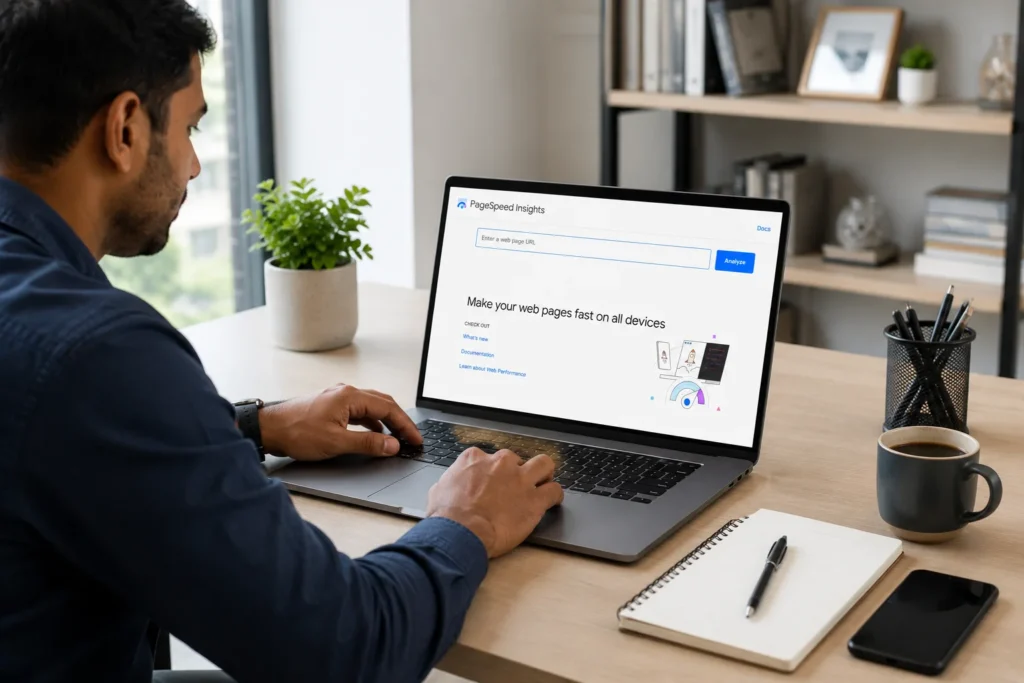
How site speed impacts SEO shows up clearly in three metrics we optimize every day. Make sure your LCP, INP, and CLS all pass Google’s thresholds.
If you’ve ever wondered, does PageSpeed Insights affect SEO? The answer is yes. The scores you see in PageSpeed Insights come from the same data Google uses for rankings. We treat those scores as our starting point.
For WordPress users, we remove unnecessary WordPress plugin bloat, optimize database queries, and set up lightweight caching so your site hits green scores across the board.
The Bottom Line
So, how important is page speed for SEO and better conversions?
It is the foundation of your digital success. It decides your rankings, your traffic, and your ability to turn visitors into customers. In a world of infinite options and short attention spans, a fast-loading site is no longer a luxury; it is the price of admission. Investing in website speed optimization service or simply cleaning up your site’s performance pays off in every single metric that matters. Whether you focus on technical SEO or user experience, speed is the one lever that improves both at the same time.
Keep it fast, keep it clean, and the results will follow.
FAQ’s
Let’s answer a few of your queries regarding how important is page speed.
Does page speed affect SEO rankings?
Yes. Google uses Core Web Vitals as direct ranking signals. Slow pages lose positions to faster competitors.
What is a good page load time?
Under 2.5 seconds for LCP. Ideally your full page renders in 2 seconds or less. Anything above 3 seconds drives big increases in bounce rates.
How does page speed affect conversions?
A 1-second delay can cut conversions by 7%. Sites loading in 1 second convert up to three times better than sites taking 5 seconds.
Is mobile page speed more important than desktop?
Yes. Google uses mobile-first indexing, so your mobile website speed determines your rankings. Most traffic now comes from mobile users.
Can I improve page speed without technical skills?
Many quick wins like image optimization and caching are simple. For deeper results, our website speed optimization service handles it for you.