When I first started exploring ways to grow my online presence, I kept running into two terms everywhere: SEO (Search Engine Optimization) and SEM (Search Engine Marketing). At first, they sounded pretty similar—after all, both promise better visibility on Google, right? But once I dug in, I realized they work in totally different ways and can transform a business for different reasons. Well, if you’re anything like me—whether you’re running a small business, managing marketing for a brand, or simply trying to figure out how to drive more traffic—understanding the SEO vs SEM difference is a game-changer.
So in this guide, I’ll walk you through what each one really means, how they work, when to use them, and how they can help you grow faster. By the end, you’ll know exactly when to lean into SEO, when SEM makes more sense, and how the two can work together to boost your online visibility.
Let’s dive in and make this whole SEO vs SEM thing simple, practical, and easy to apply.
What is SEO?
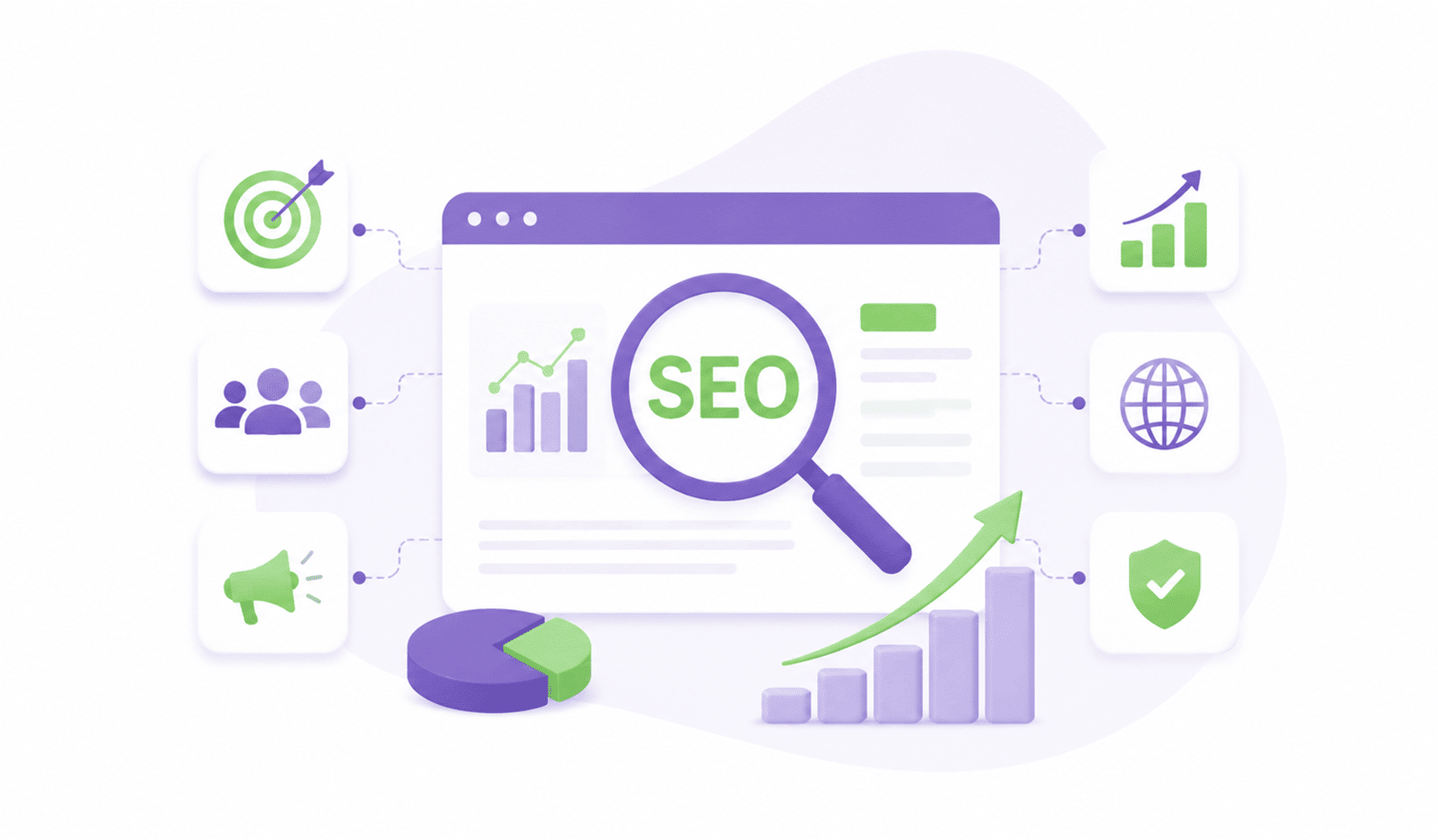
Let’s begin with SEO. SEO (Search Engine Optimization) is the process of optimizing your website to rank higher in organic search results on search engines like Google. It’s about making your website more attractive to search engines through a variety of techniques, so your pages appear higher when someone searches for specific keywords. SEO focuses on improving user experience, site speed, keyword targeting, and content quality.
SEO Key Strategies
- Keyword Research: Identifying the specific keywords that your target audience is searching for.
- On-page Optimization: Crafting content and structuring your site to meet both user and search engine expectations.
- Off-page Optimization: Building quality backlinks from reputable sites.
- Technical SEO: Optimizing website architecture, mobile-friendliness, and load speeds.
SEO is often a long-term strategy that builds your site’s authority and trust over time. The result? Organic traffic that grows steadily and sustainably.
What is SEM?
SEM (Search Engine Marketing), on the other hand, involves paid advertising on search engines. The most common form of SEM is Google Ads, where businesses pay to appear at the top of search engine results pages (SERPs) when users search for specific terms. Unlike SEO, which focuses on organic rankings, SEM offers immediate visibility through paid ads.
SEM Key Strategies
- Paid Search Ads: Bidding on keywords to place ads on search engine results.
- Targeting and Segmentation: Choosing the right audience based on location, interests, and demographics.
- Pay-Per-Click (PPC): Paying a fee each time someone clicks on your ad.
- Ad Copy and Design: Creating compelling ads that drive traffic to your site.
Unlike SEO, SEM delivers immediate results, making it ideal for short-term goals like promotions, product launches, or targeting specific seasonal campaigns.
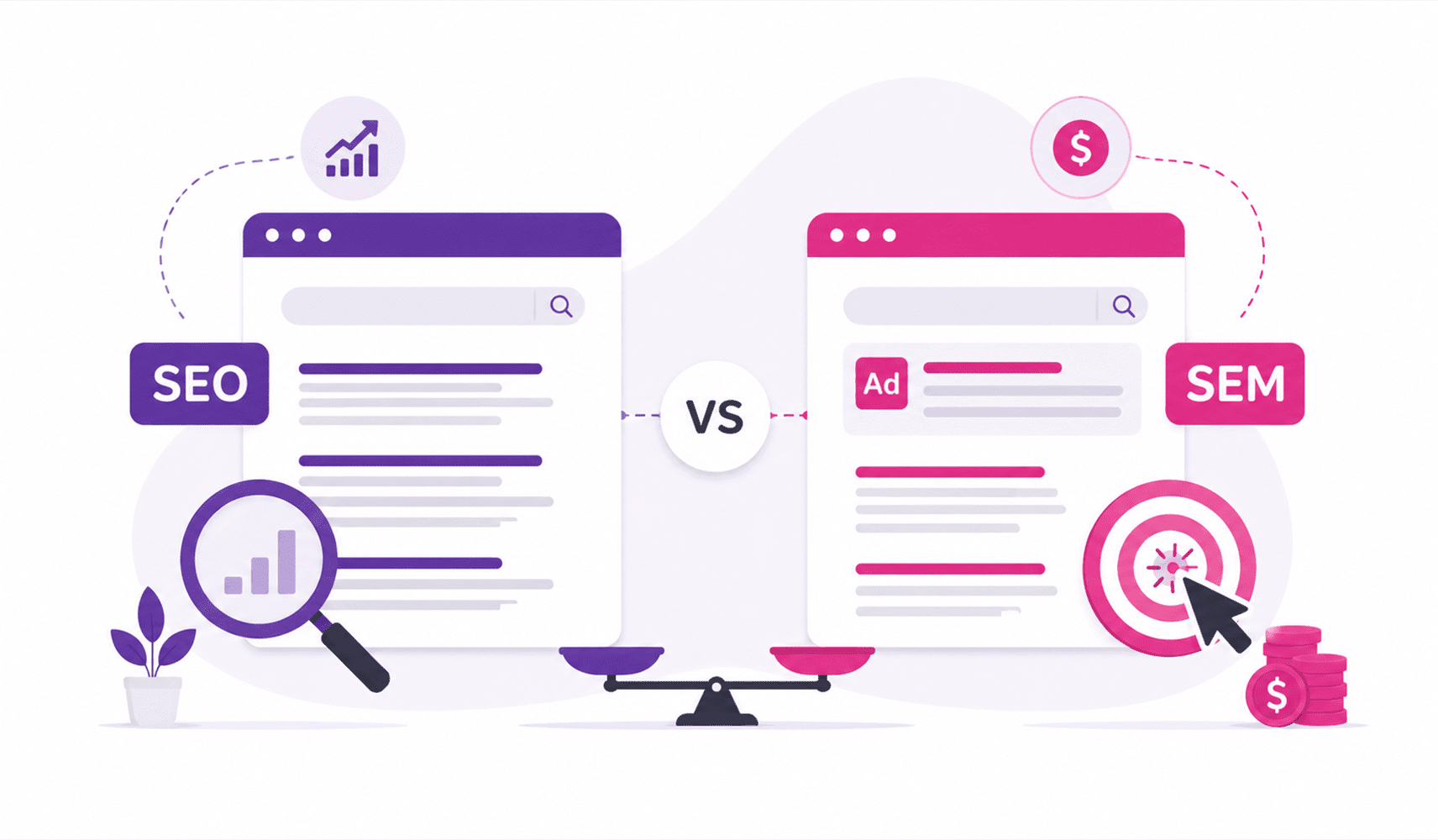
SEO vs SEM: The Ultimate Showdown!
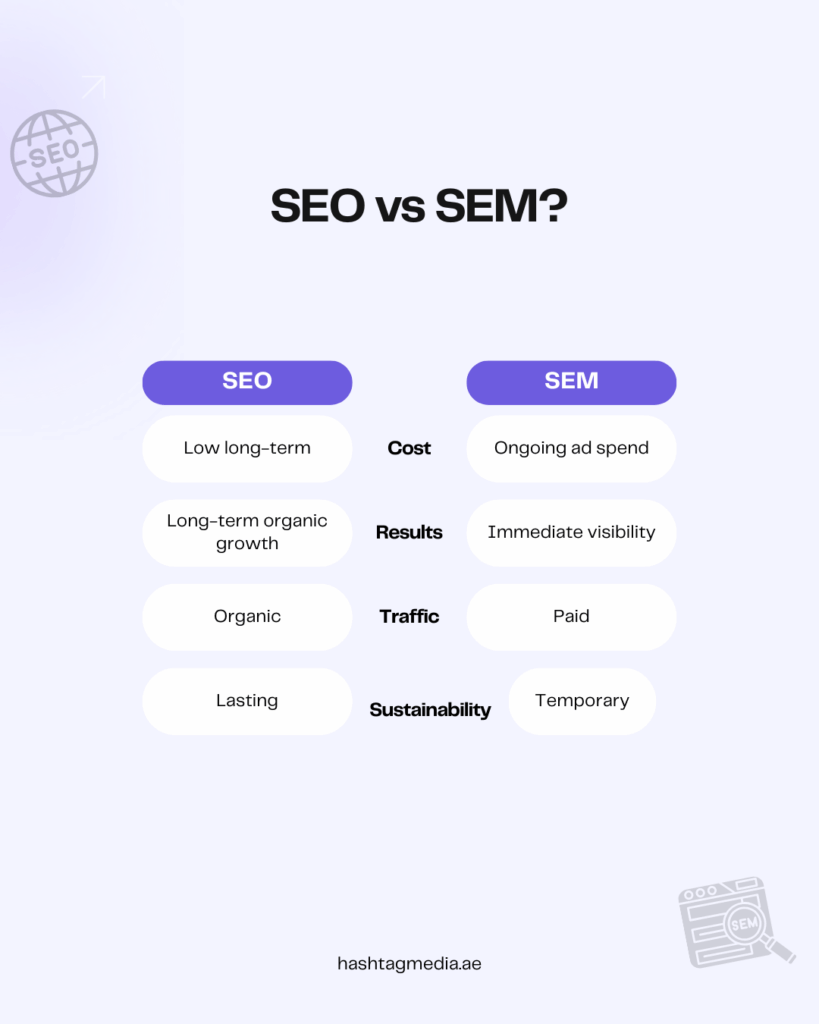
Time to break down the key differences and help you decide which strategy works best for your business.
A.Time and Results
- SEO: Takes time to show results. Your website needs to gain authority, and it can take months before you see significant traffic.
- SEM: Provides immediate visibility. Once your campaign is live, you can see results within hours or days.
B. Cost
- SEO: It’s cost-effective in the long run. You may need to invest in tools or hire an SEO expert, but once you achieve good rankings, the traffic is essentially free.
- SEM: It requires a budget to bid for keywords. If you stop paying, your ads will disappear. The cost can add up quickly, especially for competitive keywords.
C. Traffic Type
- SEO: Focuses on organic traffic, which is often more targeted and sustainable. It’s the type of traffic that trusts your site because it’s found via search.
- SEM: Focuses on paid traffic. You can reach a larger audience, but it may not always convert as well as organic visitors.
D. Long-term vs. Short-term
- SEO: Long-term strategy, ideal for building lasting online visibility.
- SEM: Short-term strategy, perfect for quick wins, such as sales promotions or holiday marketing campaigns.
SEO vs SEM: Which Is Better?
The question “SEO vs SEM: Which is better?” depends on your goals. Here’s a breakdown:
- Use SEO if you want long-term growth, sustainable organic traffic, and a strong online presence without constantly spending on ads.
- Use SEM if you need immediate traffic for specific keywords, product launches, or short-term goals like a seasonal campaign.
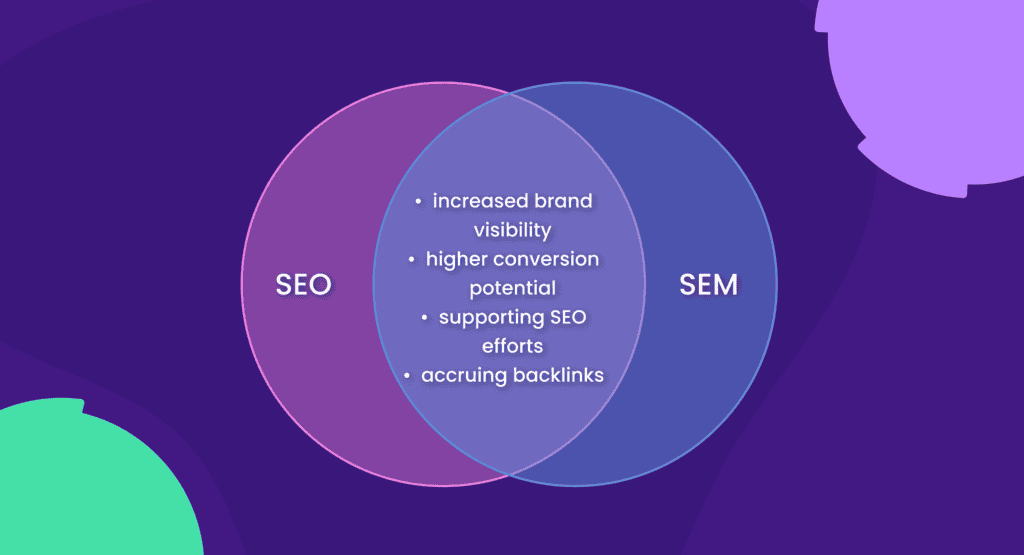
In many cases, combining both strategies works best. For example, you might use SEM to boost traffic while you work on improving your SEO for long-term results.
When to Choose SEO or SEM for Small Businesses
trafficthinktank.com
SEO offers sustainable growth on a budget, while SEM delivers quick visibility for those looking to make an immediate impact.
For Small Businesses
SEO can be a game-changer for small businesses that want to build a strong online presence over time without breaking the bank. On the other hand, SEM can help businesses with a budget to quickly gain visibility.
For Established Businesses
Larger businesses can benefit from both SEO and SEM. While SEO helps maintain long-term traffic, SEM can target specific audiences for seasonal promotions or new product launches.
For Niche Markets
If you’re targeting a niche market, local SEM or targeted ads can work wonders. For instance, SEM agencies in Dubai specialize in creating campaigns tailored for local audiences, driving more relevant traffic.
For Driving Immediate Traffic
If you’re looking to drive traffic immediately for a limited-time offer, SEM is your best bet. SEO will take time, but with SEM, you can see results in a matter of hours.
Case Studies: SEO vs SEM in Action
To see the effectiveness of both strategies, let’s look at some real-world examples:
- Case Study 1: Local SEM for a Dubai Business
A local SEM company in Dubai helped a restaurant chain increase online orders during Ramadan using targeted ads. The campaign attracted more customers, leading to immediate revenue growth. This was a classic case of SEM driving organic results through paid campaigns. Case Study 2: SEO for an E-commerce Store
An e-commerce store specializing in custom t-shirts focused on SEO to boost organic traffic. Over six months, their search engine results pages (SERPs) rankings for key terms like “custom t-shirts” improved, driving consistent and organic traffic without the need for ongoing ad spend.
Both SEO and SEM offer distinct advantages depending on your business needs. Understanding the SEO and SEM difference will help you tailor your strategy for success.
Need high-quality content to boost your SEM campaigns? You can always explore our SEO content writing services.
How to Improve SEM
Credit: highfivemedia.com
To get the most out of your SEM campaigns, focus on:
- Refining your keyword selection: Choose keywords that are specific to your audience and offer a strong return on investment.
- Improving ad copy: Make sure your ads are compelling and relevant.
- Optimizing landing pages: Ensure that users have a smooth experience once they click on your ad.
- Monitoring campaign performance: Use data-driven insights to adjust your campaigns in real time.
FAQ’s
Here’s a quick look at the most common questions about SEO vs SEM.
What is the main difference between SEO and SEM?
SEO focuses on optimizing your site to appear in organic search results, while SEM involves paid advertising to get visibility on search engines.
Which one is better for small businesses: SEO or SEM?
SEO is generally more cost-effective for small businesses in the long run, but SEM can provide immediate results if you’re looking for quick visibility.
What does SEM stand for?
SEM stands for Search Engine Marketing, a paid strategy used to promote websites on search engines through ads.
Can SEO and SEM work together?
Yes, combining SEO and SEM can be highly effective. SEO builds long-term traffic, while SEM provides immediate results, especially for promotions or launches.
How can I improve my SEM campaigns?
Improving SEM campaigns involves refining your keyword strategy, optimizing ad copy, and analyzing performance data to make real-time adjustments.
The Bottom Line
At the end of the day, choosing between SEO vs SEM really comes down to what you’re aiming for in your business. Ultimately, your choice between SEO vs SEM depends on your goals. SEO is great for long-term, sustainable growth, while SEM delivers quick wins and immediate visibility. The best results often come from combining both.
Partnering with SEM consultants and SEO agencies can help you fine-tune your strategy for maximum impact. Whether you’re aiming for organic rankings or driving paid traffic, understanding the SEO vs SEM difference ensures you make the right choice for your business.
Master the SEO vs SEM balance for quick wins and long-term success!