There are two ways to rank on Google. The right way and the way that gets you penalised. Black hat SEO is the second one. And the worst part is that a lot of businesses are using it without even knowing. Their agency is cutting corners. The backlinks are toxic, and their rankings are borrowed time. If Google hasn’t caught up yet, it will. This guide covers the most common black hat SEO risks, the tactics you need to recognise, and what to do if your site has already been exposed to them.
What Is Black Hat SEO?

Credit: digitalauthority.me
Black hat SEO is the practice of using tactics that violate search engine guidelines. The goal is algorithm manipulation, gaming the system to rank higher rather than earning that position through genuine value.
Google, Bing, and other search engines have clear rules. Black hat tactics try to game those rules through deceptive practices. They optimise for the crawler, not for the person actually using the search engine.
Think about that for a second.
Someone types a query into Google. They’re looking for a real answer. Black hat SEO puts manipulated content in front of that person instead of genuinely helpful content.
That’s why search engines crack down on it so aggressively. It’s not just rule-breaking. It actively makes the internet worse.
The term “black hat” itself comes from old Western films. The villain wore a black hat. The hero wore a white one. In SEO, that same logic applies; there’s a clear ethical line between what’s acceptable and what’s not.
Why Do People Still Use Black Hat SEO?
Good question. So why do people use black hat SEO if it’s this risky?
A few reasons.
- Speed. White hat SEO takes time. Building real authority, earning genuine backlinks, and producing quality content – it’s a slow process. Black hat tactics, whether done manually or through black hat SEO tools, can sometimes produce visible results faster.
- Cost. Legitimate SEO requires real investment. Black hat SEO packages often appear cheaper upfront. They’re not, once you factor in the cost of recovery.
- Lack of awareness. Many business owners don’t fully understand what their SEO agency is doing. They just see rankings go up. They don’t ask how.
- Short-term thinking. Some businesses only need rankings for a campaign period. They’re willing to risk a penalty later.
- Misinformation. There’s still a lot of outdated SEO advice floating around. Some people genuinely don’t know certain tactics are against the rules.
The reality? The risks of using black hat SEO tactics rarely justify the short-term gain. Google’s algorithms get smarter every year. What worked in 2012 will get you penalised in 2025.
Common Black Hat SEO Techniques That Create Risks
Credit: contentwriters.com
Before we get to the risks themselves, you need to recognise what black hat SEO actually looks like in practice.
Here are the most common tactics to watch out for:
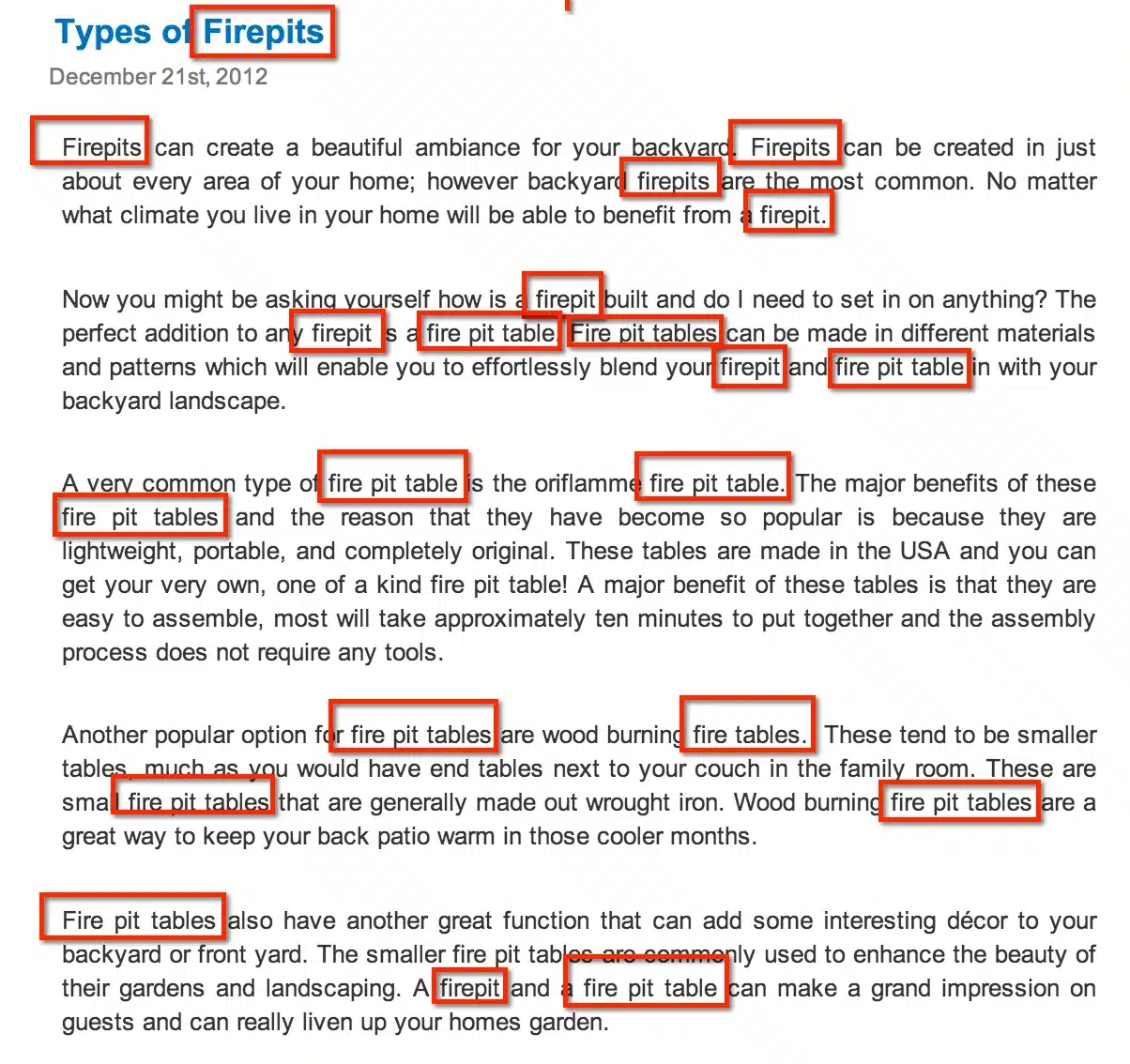
- Keyword Stuffing: Repeating your target keyword over and over in the content. It reads unnaturally. Crawlers can spot it instantly. No human enjoys reading it.
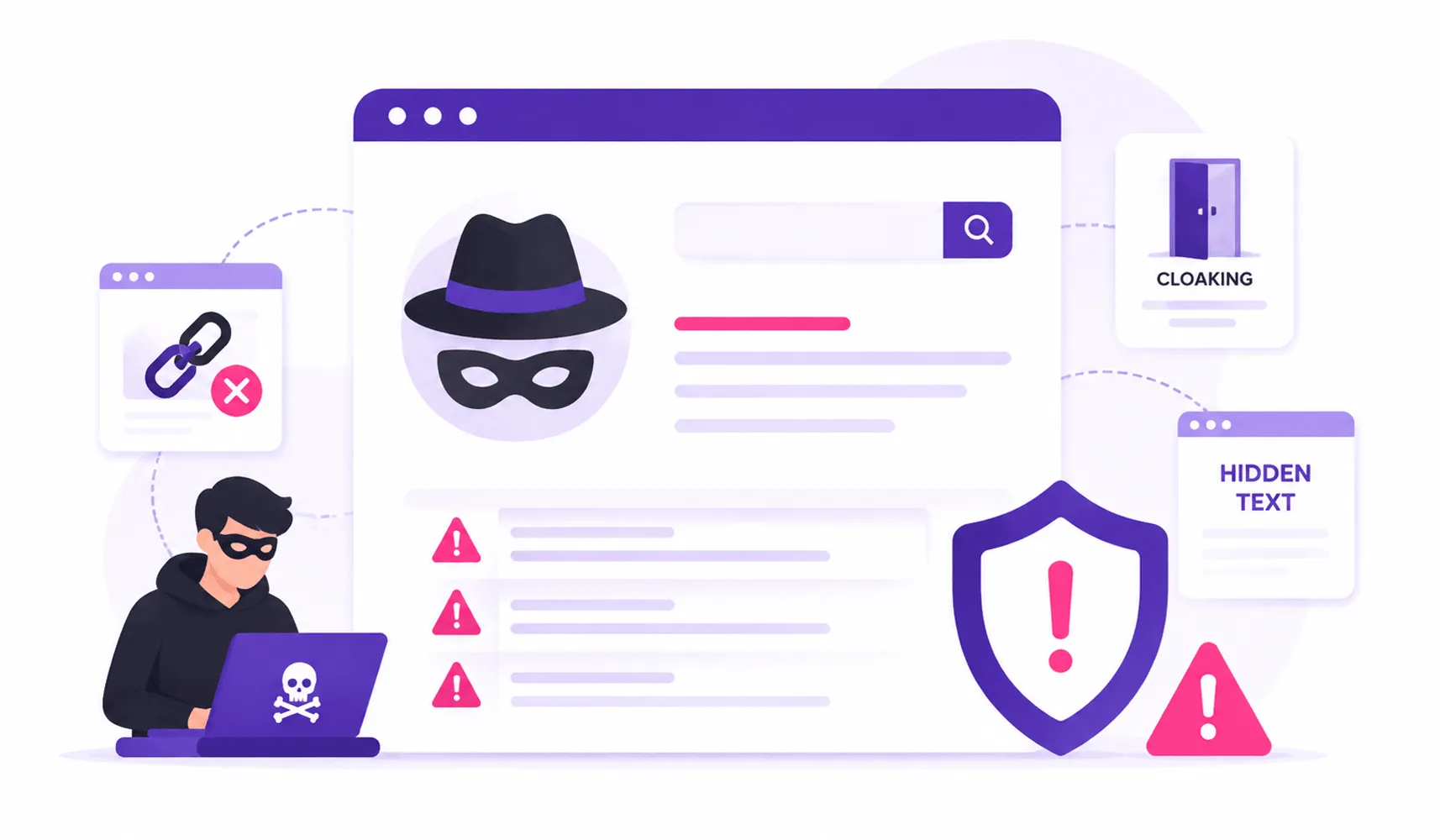
- Cloaking Techniques: Showing one version of a page to Google and a completely different version to actual users. A textbook deceptive practice that Google takes very seriously.
- Hidden Text and Links: Placing hidden text or links in white font on a white background. Invisible to visitors, but the crawlers pick it up. Classic trickery tactic.
- Black Hat SEO Link Building: Buying paid links, participating in link farms, or using Private Blog Networks (PBNs) to artificially inflate your backlink profile. These black hat SEO backlinks look unnatural. Google knows.
- Anchor Text Manipulation: Stuffing your backlinks with exact-match commercial anchor text. It’s a signal that your link profile was engineered, not earned.
- Doorway Pages: Creating low-quality pages stuffed with keywords, designed only to funnel traffic somewhere else. They serve no real purpose for the user.
- Content Scraping: Copying or “spinning” content from other websites and republishing it as your own. Search engines identify it as duplicate content, and it adds zero value.
- Duplicate Content: Replicating the same page across multiple URLs to target more keywords. Looks like a shortcut. Works like a trap.
- Schema Markup Spam: Misusing structured data to fake rich snippets. For example, adding fake 5-star review markup to a page that has no real reviews.
- Redirects Abuse: Redirecting users to a completely different page than what was indexed. Google sees one thing; the user lands somewhere else entirely.
- Negative SEO: Pointing toxic backlinks at a competitor’s site to trigger a penalty against them. This is a real practice, and it does happen.
- Comment Spam: Dropping irrelevant links in blog comments and forums to build backlinks. It never works and always looks terrible.
Did these black hat SEO techniques work a decade ago? Honestly, some of them did. Today, they’re a fast track to disaster.
What Are the Biggest Black Hat SEO Risks?

Credit: connectionmodel.com
Here’s the part that really matters. What are the risks of black hat SEO when Google catches up with you? Let’s go through them one by one.
Google Penalties: Manual Actions
Google employs a team of human reviewers. If your site is flagged, a real person reviews it. If they find violations, you get a manual action, one of the most serious Google penalties a site can receive. This is applied directly to your Search Console account. Your rankings can collapse immediately.
Recovering from a manual penalty is not simple. You have to fix every violation, submit a reconsideration request, and then wait sometimes months for Google to review it again.
Algorithmic Penalties
Not all penalties come from a manual review. Major algorithm updates like Penguin, Panda, or the more recent Helpful Content updates are specifically designed to catch algorithm manipulation and filter out deceptive content.
One update can wipe out rankings you spent years building. And you may not even know why until you investigate.
Complete Deindexing
In severe cases, Google removes your site entirely from search results. You vanish. No rankings, no organic traffic. Nothing.
This is the nuclear option, but Google does use it. Getting reindexed after a full removal is a lengthy, uphill process.
Massive Traffic Loss
Even without a full deindex, a penalty can tank your organic traffic overnight. The cruel irony of traffic manipulation tactics is that they ultimately reduce your traffic instead of growing it.
For businesses that rely on search traffic, this means fewer leads, fewer sales, fewer customers. The drop can be sudden and severe. Recovery is measured in months, sometimes years.
Revenue Impact
Lower traffic means lower revenue. Simple as that. If you’ve built your business model around organic search, a penalty can genuinely threaten the business’s survival.
Some companies have had to double or triple their PPC spend just to compensate for traffic lost to penalties.
Reputation Damage and Lost Trust
This one doesn’t get talked about enough.
When users land on a spammy page, encounter a bait-and-switch redirect, or see content that’s clearly manipulated, they lose trust in your brand and business. Reputation damage from black hat SEO isn’t just an SEO problem; it’s a business problem. And that trust is incredibly hard to rebuild.
Long and Painful Recovery
Let’s say you clean everything up. You remove bad links. You disavow what you can’t remove. You rewrite the content. You fix the redirects.
Recovery still takes time. Search engines don’t immediately reward sites that clean up their act. It can take six to twelve months or longer to recover rankings after a penalty.
Wasted Investment
You pay someone to do SEO. They use black hat tactics. You see short-term gains. Then the penalty hits. Now you’re paying someone else to fix the damage.
You’ve paid twice. Once to build a risky foundation. Once to tear it down and start over.
Vulnerability to Competitors
If a competitor knows you’re using black hat tactics, they can file a Google black hat SEO report against your site. The option to report black hat SEO to Google is publicly available; anyone can use it. Competitors can and do use it.
You’ve essentially handed them a weapon.
Ineligibility for Rich Features
Sites that misuse schema markup or engage in deceptive practices can lose eligibility for rich results, featured snippets, knowledge panels, and star ratings. These are valuable SERP features that drive click-through rates. Losing access to them hurts your performance even if you’re not fully penalised.
What Should You Do If Your Website Has Used Black Hat SEO?
Credit: marymakite.com
- First: don’t panic.
- Second: be honest with yourself about what happened.
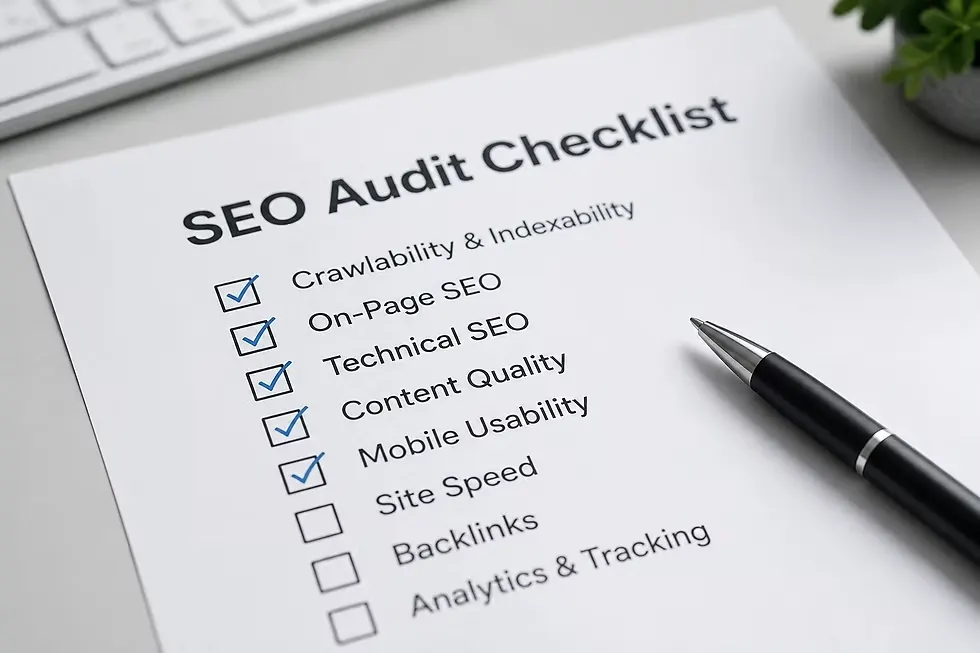
Here’s a step-by-step approach to cleaning things up.
1. Audit your backlink profile. Use tools like Google Search Console, Ahrefs, or SEMrush to identify toxic backlinks and unnatural links pointing to your site. Look for backlinks from low-quality directories, PBNs, or irrelevant foreign sites.
2. Remove what you can. Contact the webmasters of those toxic linking sites. Ask them to remove the links. Not everyone will respond, but it’s a necessary step before you disavow.
3. Disavow links you can’t remove. For links you can’t get taken down, use Google’s Disavow Tool. This tells Google to ignore those links when evaluating your site. Be careful with this; disavowing good links by mistake can hurt you.
4. Audit your on-page content. Look for keyword-stuffed pages. Hidden text, doorway pages that serve no real purpose. Clean all of it up.
5. Fix technical issues. Review your redirects. Make sure you’re not cloaking. Check that your schema markup accurately reflects your content.
6. Check for manual actions and know how to report black hat SEO to Google if you’ve been targeted. Log into Google Search Console. Go to Security & Manual Actions. If there’s a manual action against your site, it’ll be listed there with details. And if a competitor has targeted you with negative SEO tactics, Google’s spam report form lets you flag it too.
7. Submit a reconsideration request (if needed). If you have a manual action, once you’ve cleaned everything up, submit a reconsideration request. Be transparent. Explain what was done, what you’ve fixed, and how you’ll prevent it from happening again.
8. Shift to white hat practices going forward. This is the most important step. Invest in real content. Build real links through genuine outreach, valuable resources, and authentic relationships.
Recovery is possible. But it takes patience and a genuine commitment to doing things the right way.
Ending Remarks
Here’s the truth about black hat SEO risks: they’re not hypothetical.
Businesses lose their entire organic presence because of shortcuts that seemed harmless at the time. The adverse effects of these tactics – lost rankings, lost traffic, lost revenue, lost trust – can take years to undo.
The appeal of fast rankings is understandable. But Google’s algorithms are more sophisticated now than they’ve ever been. The window for black hat tactics to work is shrinking. The consequences of getting caught are growing.
If you’re not sure whether your current SEO strategy crosses any lines, get a proper audit done. It’s better to know now than to find out after a penalty drops your traffic by 80%.
At Hashtag Media, we build SEO strategies that are built to last – no shortcuts, just results that hold up over time.
Frequently Asked Questions
Before you invest your time and effort in a new SEO campaign, here are a few helpful questions.
Is black hat SEO illegal?
No, black hat SEO is not illegal in the traditional legal sense. You won’t go to jail for keyword stuffing. However, it violates the terms of service set by search engines like Google. Your site can be penalised, deranked, or removed from search results entirely.
How long does it take to recover from a black hat SEO penalty?
It depends on the severity of the violation. Minor algorithmic penalties can take three to six months to recover from after cleanup. If you’ve received a manual action, recovery can take six to twelve months or longer.
Can I get penalised for black hat SEO I didn’t know about?
Yes, unfortunately. The penalty applies to the domain, not the person who made the decisions. This is why it’s critical to audit your site’s backlink profile and SEO history, especially when switching agencies.
What is the difference between black hat and grey hat SEO?
Black hat SEO clearly violates search engine guidelines. Gray hat tactics sit in a murky middle ground; they aren’t explicitly banned, but they push the boundaries. Things like aggressive guest posting, borderline link exchanges, or buying aged domains fall here.
How can I check if my website has been penalised?
The fastest way is to check Google Search Console under “Security & Manual Actions”. If there’s a manual action, it will be listed there. For algorithmic penalties, look for a sharp, unexplained drop in organic traffic that coincides with a known Google algorithm update.