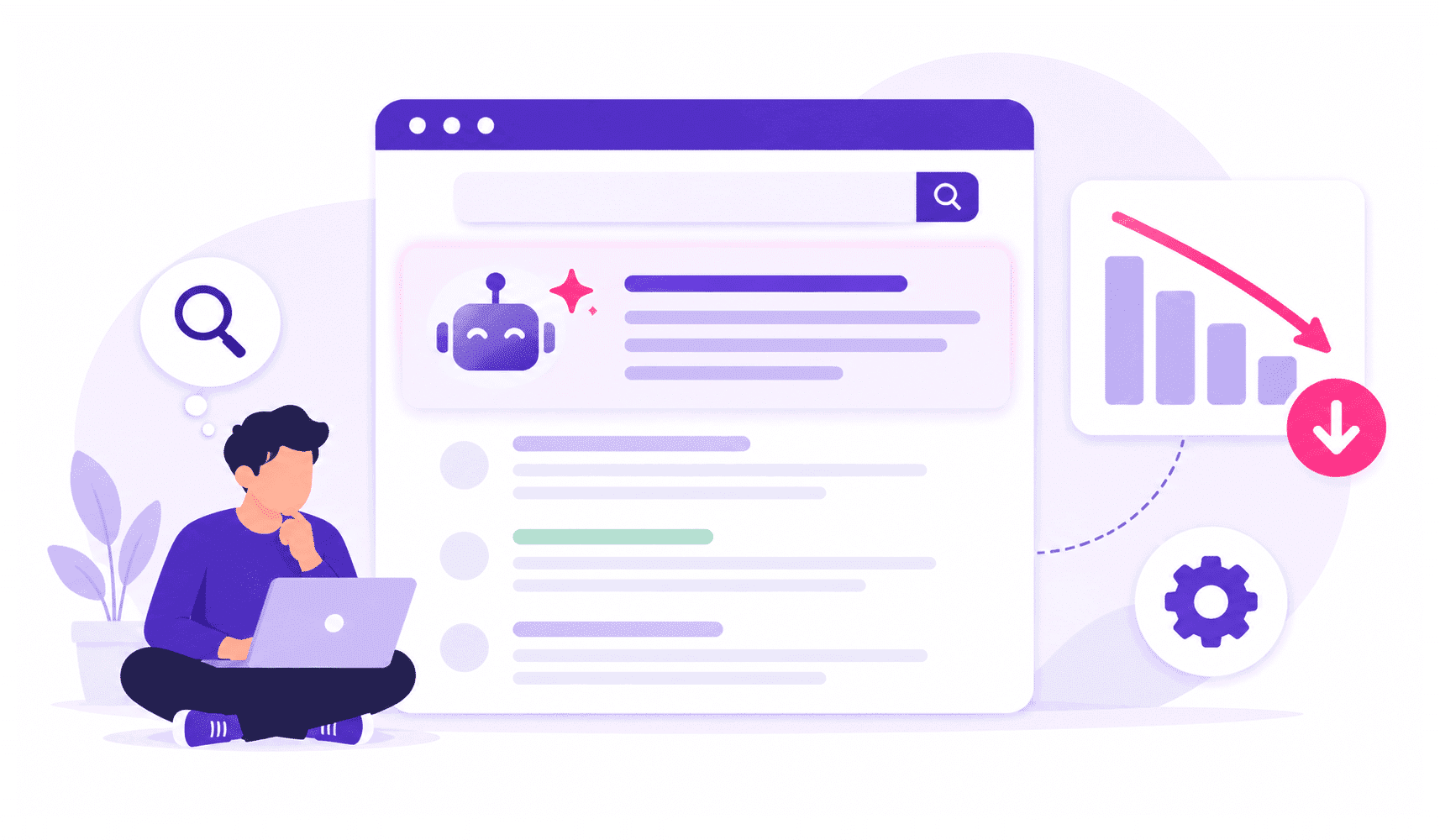
Here’s something strange happening to a lot of websites right now. Rankings look fine: position two, three, and sometimes one. Search Console shows impressions climbing month over month. And yet the traffic line keeps sliding down like a slow leak. If that’s your site, you’re not imagining it. And no, you probably didn’t get hit by one of Google’s algorithm changes. You got an AI overview. The AI overviews impact on SEO is real. It’s also badly misunderstood. Most articles treat it like the end of organic search. It isn’t; it’s like a sorting mechanism. Google now answers the easy questions itself and passes you the hard ones.
That single distinction changes how you should work. Let’s get into it.
What Are Google AI Overviews?
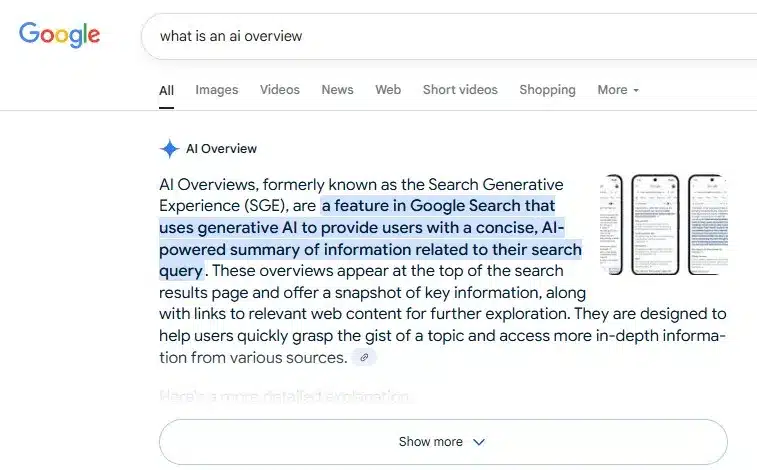
Credit: temeritydigital.com.au
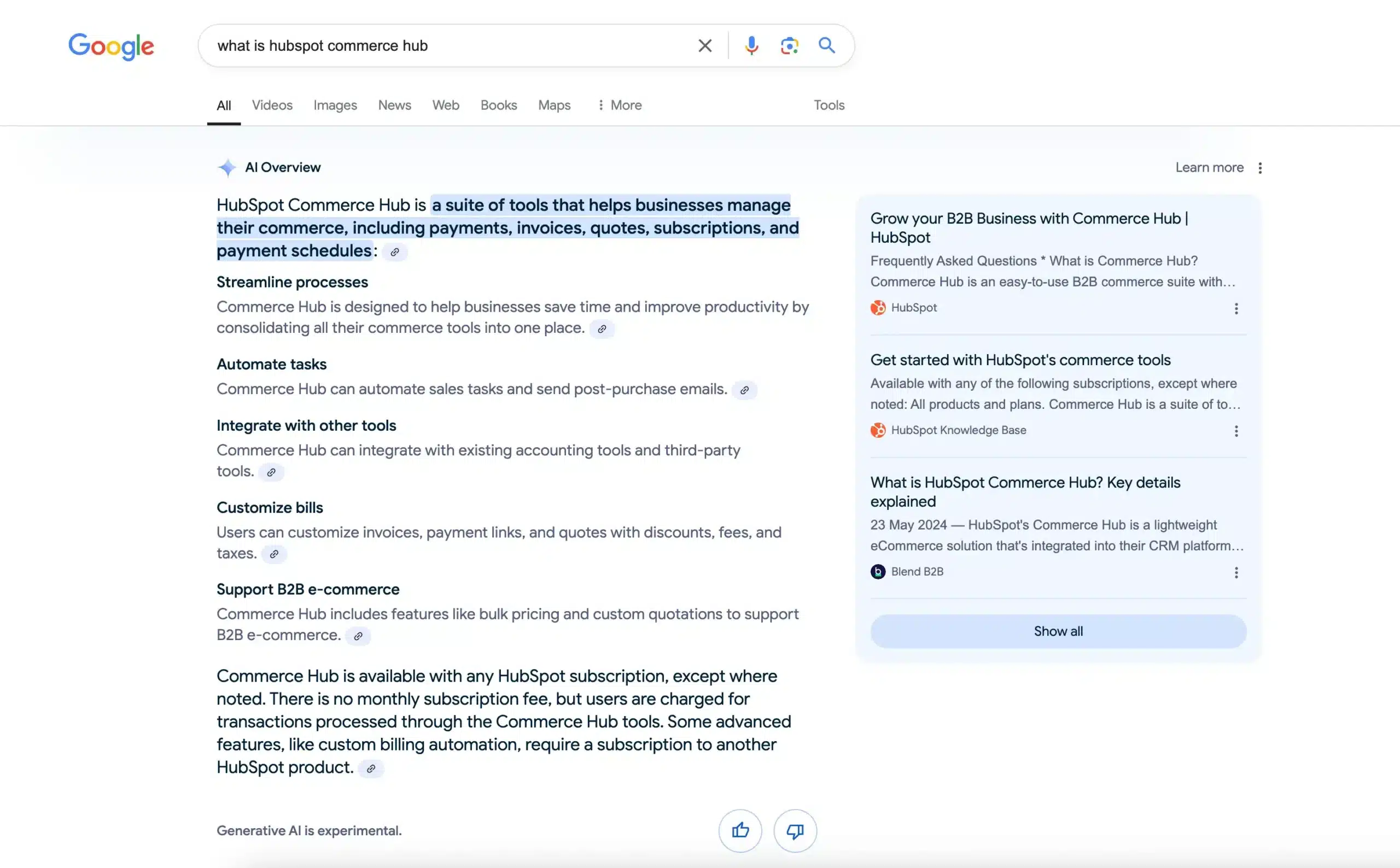
An AI Overview is a generated summary that sits at the very top of Google’s results page. It pulls from several web pages, writes an original answer, and links to the sources it used.
Open one up, and you’ll usually find:
- A short summary answering the question in a conversational tone
- Bolded key points or mini-headings inside the box
- Clickable source citations, shown as cards or inline links
- Follow-up questions to keep the user searching
- Sometimes a video, an image, or a numbered list for how-to queries
It started as Search Generative Experience in 2023. Google renamed it and rolled it out widely in May 2024. By 2026, it appears on roughly half of all queries.
So far, so familiar. Here’s the part most articles skip.
Google doesn’t run one search to build that box.
It uses a technique called query fan-out. Your single query gets broken into several smaller ones, all searched at the same time. A search for “business casual wedding attire” quietly becomes four or five searches:
- What should men wear?
- What should women wear?
- Which shoes work?
- Is a tie required?
Google then answers each sub-question using whichever page answers that piece best. Those pages get the citation.
Read that again. The page Google cites is often not the page targeting your keyword.
Ahrefs found that around 62% of AI Overview citations come from pages sitting outside the traditional top 10. Your ranking is no longer the gate. Your answer is.
How Are AI Overviews Impacting SEO Performance?
Credit: seoclarity.net
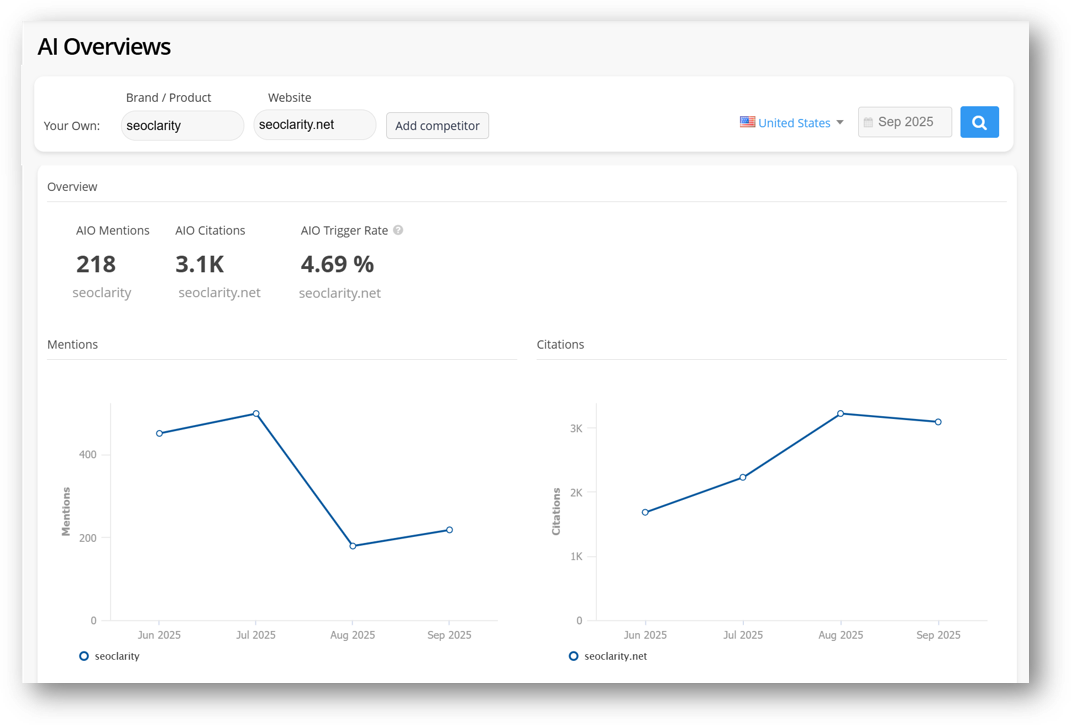
Three things shifted. Visibility, clicks, and the kind of person who lands on your site.
Visibility got squeezed. The AI Overview box can take up more than 1,700 pixels. Your organic listing didn’t lose its position. It just got pushed far below the fold.
Clicks dropped while impressions rose. BrightEdge data showed impressions up 49% year over year while click-through rate fell about 30%. Studies since have measured CTR drops between 34% and 61% on queries where an overview appears. Ahrefs put AI Overview presence at 48% of queries in March 2026, up from 34.5% three months earlier.
That’s faster than most teams adjusted.
And then the twist nobody expects. Organic traffic fell; revenue often didn’t.
HubSpot is the public example. Its organic traffic reportedly dropped by around 80%, yet the company still posted 21% revenue growth for 2024. Digital Applied’s analysis found visitors arriving from AI Overview-affected pages converting at dramatically higher conversion rates than standard search visitors.
The mechanism is simple. Google filters intent before the click. Somebody settling a bar bet about caffeine gets their answer and leaves. Somebody genuinely trying to cut their caffeine intake still clicks.
You lost the first person; you never wanted them.
Which SEO Content Is Most Exposed to AI Overviews?
Credit: affiliatesummit.com
So what are the negative impacts of AI overviews on SEO, specifically? They land unevenly, not close to evenly. The damage tracks query type almost perfectly.
- Simple “what is” pages take the worst of it. Digital Applied recorded CTR drops as steep as 89%. Two sentences answer the question, so nobody clicks.
- How-to content sits around a 45% drop. Long procedural guides hold up better than short explainers.
- Comparison and “best X” pages lose roughly 28%. Buyers still want detail before spending money.
- Branded and navigational searches barely move, about 15%. Somebody searching your name intends to reach you.
The impact of AI overviews on SEO traffic also splits hard by industry:
- Hit hardest: health publishing, personal finance, education, technology tutorials, recipes, travel guides
- Moderate: B2B SaaS, legal explainers, financial education content
- Barely touched: ecommerce, local services, niche B2B with long buying cycles
Here’s the practical move. Stop auditing your content by traffic volume, and audit it by query type.
Sort every URL into definitional, procedural, commercial, or branded. Your real exposure becomes visible on one spreadsheet. Most agencies still haven’t done this.
SEO Metrics Need to Change With AI Overviews
Rank tracking alone will lie to you now.
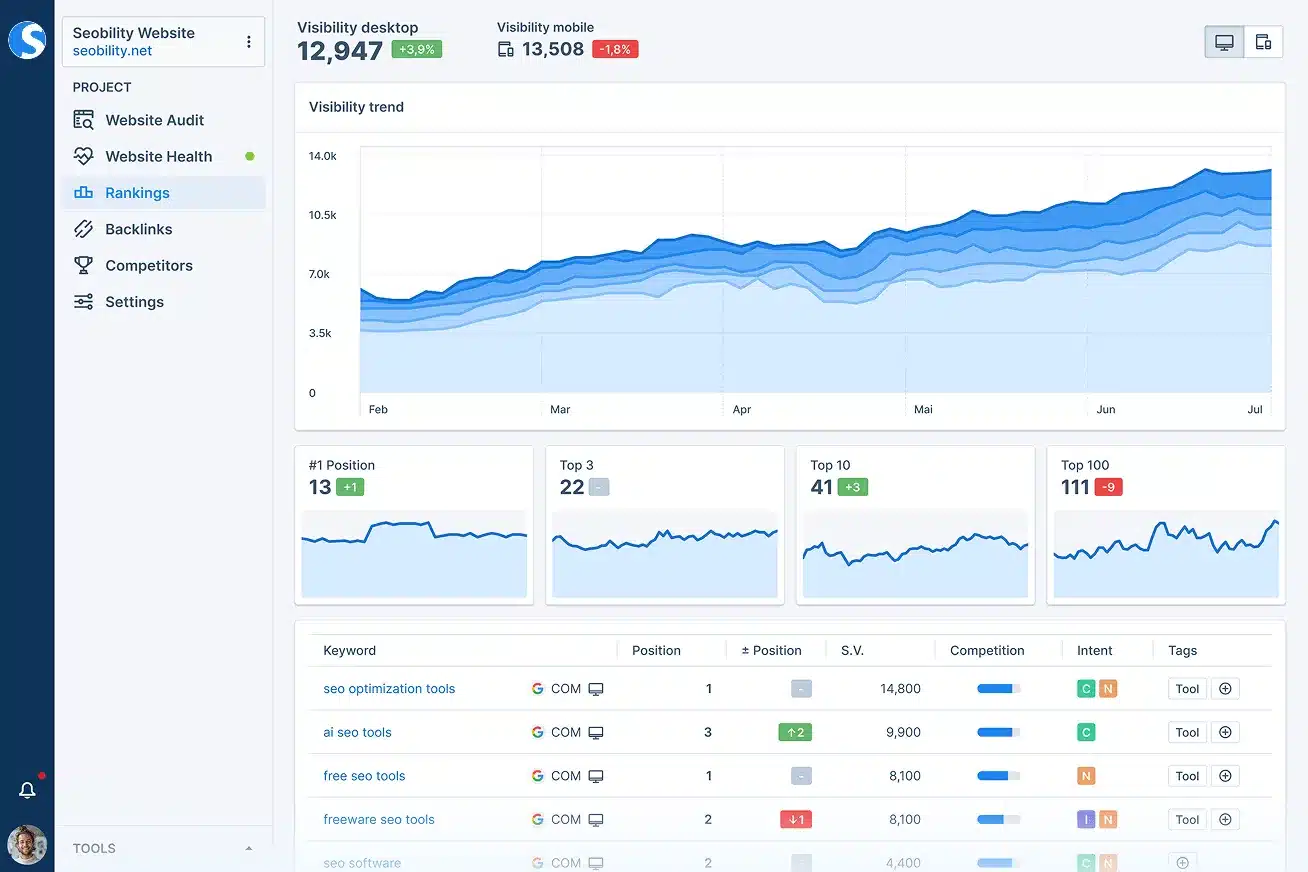
You can rank first and get nothing; you can rank eleventh and get cited. Reporting built only on position and sessions will tell your client the wrong story in both directions.
If you’re wondering how to measure the impact of AI overviews on SEO traffic, these are the performance metrics worth watching:
- Citation presence. Are you appearing inside overviews for your money keywords? Check manually, or use the AI Overview tracking now built into Semrush and Ahrefs.
- Branded search volume. This is the sneaky one. Citations build brand visibility without clicks. If branded searches climb while sessions fall, the citations are working.
- Conversions by entry page. Fewer sessions with more leads is a win. Report it that way.
- Impression share. You’re still being seen. That has value even unclicked.
- Bounce rate and time on page. AI-referred visitors arrive with context already. Engagement should look better, not worse.
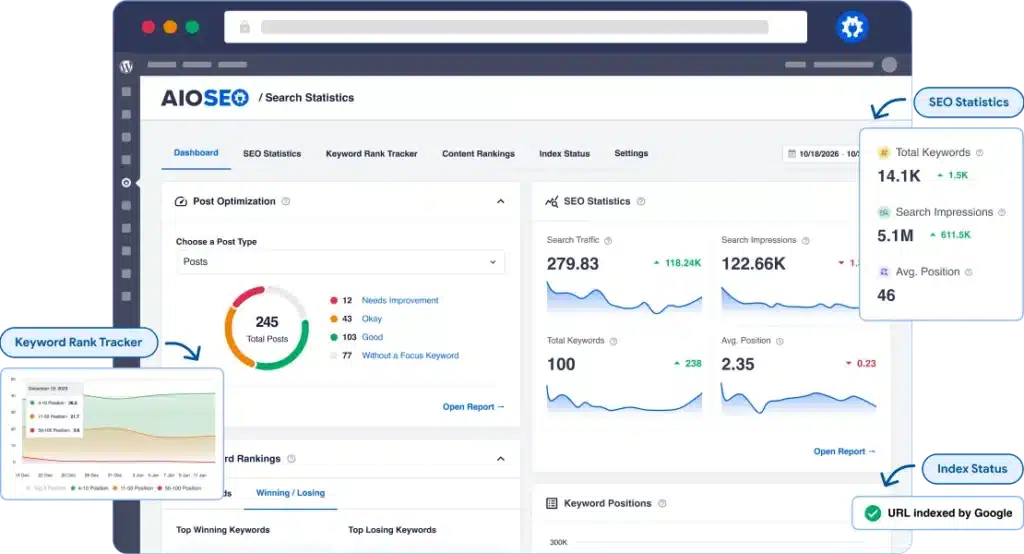
One warning before you build a dashboard. AI Overview data does flow into Google Search Console, but you can’t filter it out separately. Anyone promising you clean AI Overview reporting from GSC alone is guessing. Proper traffic analysis here means combining GSC with a third-party tracker and some manual checking. That’s exactly the kind of SEO services we provide as Hashtag Media: looking beyond rankings to track visibility, citations, engagement, and conversions properly.
How to Protect SEO Performance in the AI Overview Era
Credit: seobility.net
None of this requires a new playbook. It requires emphasis on different parts of the old one. If you want to know how to show up in AI Overviews, start here.
Answer in the first 100 words. Lead with the direct answer, then expand. Google’s selection strongly favors pages that answer immediately instead of building up to it over six paragraphs.
Write for sub-questions, not just the head keyword. Since fan-out breaks queries apart, your AI Overviews content strategy should cover every angle of a topic across a proper cluster. More surface area means more chances to be cited.
Publish things a model cannot generate. This is the real content optimization work:
- Your own client numbers and results
- A screenshot from a real dashboard
- A cost breakdown for your specific market
- A firm opinion somebody could disagree with
AI summarizes what already exists. Give it something that doesn’t.
Make it easy to lift. Question-based H2s and H3s. Short paragraphs. Numbered steps. A comparison table where a table makes sense. Clean on-page SEO has always helped humans skim; now it decides whether a machine can extract you.
Add structured data. The schema types that matter most here:
- Article, with author, datePublished, and dateModified
- FAQPage for question-and-answer sections
- How-to for step-by-step content
- Organization and Person for entity and author signals
Don’t neglect technical SEO. Slow pages get crawled less reliably. Fix page speed, keep your site structure shallow and logical, and make sure nothing important sits behind JavaScript that Google-bot struggles with. If your content can’t be crawled cleanly, it can’t be cited.
Build the brand, not just the page. Author bios with real credentials, press mentions, and consistent naming across directories. Google’s systems are picking trusted entities, and an unknown domain isn’t one yet.
Stop depending on one channel. Email lists, communities, YouTube, and LinkedIn. Any traffic Google can’t reroute is traffic you own.
Don’t Fall for Every “AI SEO Hack”
Credit: aioseo.com
This part matters more than the tips above, so read it slowly.
Nobody has a confirmed list of ranking factors for AI Overviews. Google’s own documentation says there’s nothing special to do beyond following normal search guidance. Everything else in this article, mine included, is inference from observed patterns in the search algorithms and AI overviews impact on SEO.
So be careful with these:
- Precise multipliers. You’ll see claims like “schema increases citations by 300%. ” Those come from agency case studies, not Google. Treat them as directional at best.
- Opting out. You can use it
nosnippetto keep your content out of AI overviews. It also removes you from featured snippets and rich results. That’s a terrible trade for most businesses. - FAQ schema as a magic switch. It genuinely helps machines parse your page. It is not a lever you pull for guaranteed citations.
- Publishing more AI-written content. The worst possible response. Thin, generic content is exactly what got absorbed first. More of it just speeds up your decline.
On staying current. Everyone asks how to stay current with SEO and AI search changes, and the answer is duller than they want. Pick three or four primary sources, check your own data monthly, and ignore the rest:
- Google Search Central’s official documentation and blog
- One or two research-driven publishers, like Ahrefs or Semrush studies
- Your own Search Console and analytics, reviewed on a fixed schedule
- Manual spot-checks of ten target queries every month
That’s it; most of the noise in digital marketing right now is people guessing loudly.
So, Is AI Overview Good or Bad for SEO?
It depends entirely on what your traffic was worth.
If you monetize page views through ads or affiliate links, it’s bad. Your model depended on volume, and volume is what Google absorbed.
If you sell a service or a product, it’s mixed and often better. The benefits of AI generative overviews for SEO are real, just not the ones people expect:
- You lose browsers and keep buyers
- A citation reads like an endorsement from Google, which lifts trust before the click
- Branded search tends to rise even when sessions fall
- Smaller sites can get cited without ranking on page one
For a Dubai agency, a clinic, a hosting company, or a B2B supplier, the fear is usually bigger than the damage. What actually hurts is doing nothing while competitors restructure their content.
The old game was ranking above everyone. The new game is being the source worth quoting.
Ending Remarks
The impact of AI overviews on SEO isn’t the death of organic search. It’s the end of easy organic traffic.
Google now handles the questions that were never going to make you money. What’s left is harder to win and worth more when you win it. That’s an uncomfortable trade if you built a content strategy on volume. It’s a good trade if you built one on expertise.
Do three things this month:
- Sort your pages by query type so you know your real exposure.
- Rewrite your top commercial pages to answer in the first hundred words.
- Add one thing to each page that no model could have written.
Then check your branded search volume in ninety days. That number will tell you more than your rankings do.
If you’d like a hand mapping your exposure or rebuilding your SEO strategy for AI search, that’s the sort of work we do at Hashtag Media every week.
Frequently Asked Questions
Before we wrap up, here are a few common questions about AI overviews and SEO.
What are Google AI Overviews?
They’re AI-generated summaries at the top of Google’s results, built by pulling information from several web pages and citing them as sources. They appear on roughly half of all queries in 2026.
How is Google AI Overviews going to affect SEO going forward?
Expect the split to widen. Informational content keeps losing clicks, while commercial and branded pages hold up. The Google AI Overviews impact on SEO in 2026 is less about losing rankings and more about whether you get cited.
Can I stop my content appearing in AI Overviews?
You can, using the nosnippet tag. It also removes you from featured snippets and rich results, so it usually costs more visibility than it saves.
Do I need to rank on page one to be cited?
No. Ahrefs found that about 62% of AI Overview citations come from pages outside the top 10. Answering a specific sub-question well matters more than your overall position.
Is SEO still worth investing in?
Yes, though the goal has shifted. You’re now optimizing to be the cited source, not just the top link. Sites with genuine authority are pulling in fewer but far more qualified visitors than before.